


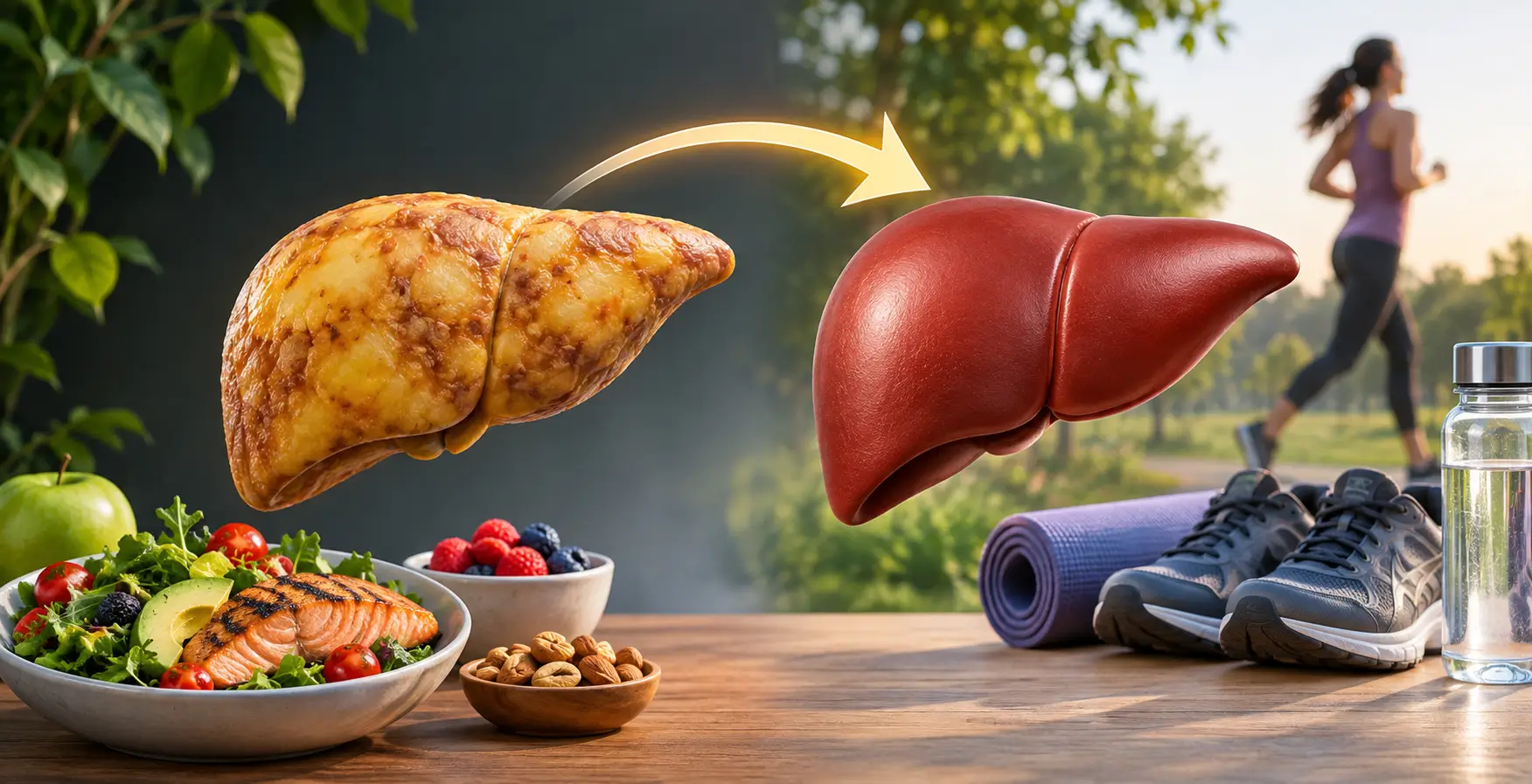
Fatty Liver Disease: Can It Be Reversed with Lifestyle Changes?
Fatty liver disease is becoming all too common in India, silent in its early stages yet affecting millions due to changing dietary habits, sedentary routines, and metabolic risk factors. The encouraging news is that fatty liver disease is largely reversible in its initial stages through targeted dietary and lifestyle modifications. However, complete recovery depends entirely on the stage and overall severity of the condition when detected.
Dr. Sanjay Rajput, Senior Gastroenterologist, Hepatologist & Endoscopist in Ahmedabad, notes that early intervention prevents permanent tissue damage, enabling the liver to naturally repair itself once underlying metabolic triggers are controlled. Understanding your diagnostic profile early remains the most critical step toward long-term recovery.
What is Fatty Liver Disease?
Fatty liver disease (hepatic steatosis) occurs when excess fat builds up in liver cells. While it is normal for the liver to contain small amounts of fat, an accumulation exceeding 5% to 10% of the organ's total weight signifies a clinical concern that requires medical evaluation.
Is Fatty Liver the Same as Fatty Liver Disease?
Not entirely. Having fatty liver simply indicates the presence of excess fat accumulation detected on an ultrasound or scan, which may initially cause no inflammation or cellular damage. Fatty liver disease, however, refers to the broader clinical condition where this fat buildup triggers or carries the risk of liver inflammation, cellular swelling, scarring, and metabolic dysfunction over time.
Stages of Fatty Liver Disease
Understanding how the condition progresses helps clarify when fatty liver reversal is possible:
- Simple Fatty Liver (Steatosis): Mild, non-progressive fat buildup without significant inflammation or tissue injury. Completely reversible.
- Non-Alcoholic Steatohepatitis (NASH/MASH): Accumulation of fat accompanied by liver inflammation and cellular damage. Still reversible with medical guidance and strict lifestyle discipline.
- Fibrosis: Persistent inflammation leads to scar tissue formation around the liver and nearby blood vessels. Partial reversal or stabilization is achievable.
- Cirrhosis: Severe, irreversible scarring where healthy liver tissue is replaced by permanent scar tissue, leading to impaired function or liver failure.
Causes of Fatty Liver Disease
Many people mistakenly assume that fatty liver is strictly caused by alcohol consumption. While alcohol is a known trigger, metabolic factors actually account for a significant and rapidly growing proportion of cases today, even among individuals who do not consume alcohol at all. Poor metabolic health, high insulin levels, and dietary habits often carry a much higher risk for developing fatty liver disease in the general population than alcohol alone.
The underlying causes vary based on metabolic, dietary, and lifestyle factors:
- High intake of refined carbohydrates, sugars, and saturated fats
- Insulin resistance, Type 2 diabetes, and prediabetes
- Obesity or excess abdominal fat accumulation
- Rapid weight loss or nutrient deficiencies
- High alcohol consumption
- Genetic predisposition and metabolic syndrome
Understanding the Terminology: MASLD vs. ALD
Medical terminology has evolved to better reflect these root causes. MASLD (Metabolic Dysfunction-Associated Steatotic Liver Disease) is the updated clinical term for what was historically called NAFLD (Non-Alcoholic Fatty Liver Disease). The shift to MASLD emphasizes the underlying metabolic risk factors rather than simply defining the disease by what it is not.
Comparison: MASLD vs. ALD
| Feature | MASLD (formerly NAFLD) | Alcohol-Related Liver Disease (ALD) |
|---|---|---|
| Primary Cause | Metabolic factors, poor diet, insulin resistance, sedentary lifestyle | Chronic, excess alcohol consumption |
| Target Population | Common in non-drinkers or minimal drinkers | Directly linked to high alcohol intake |
| Key Risk Factors | Obesity, Type 2 diabetes, high cholesterol | Quantity and duration of alcohol consumption |
| Initial Treatment Focus | Weight loss, low-GI diet, exercise, metabolic control | Complete alcohol abstinence, nutritional support |

"The liver is one of the most resilient organs in the human body. When caught early, fatty liver reversal isn't just possible; it is expected with the right clinical approach, disciplined nutrition, and consistent activity."
— Dr. Sanjay Rajput
Fatty Liver Treatment: How is it Diagnosed & Treated?
Accurate diagnosis requires specialized clinical testing. Common diagnostic methods include:
- Ultrasound Scanning: Initial screen to detect fat accumulation.
- Blood Tests (Liver Function Tests & FibroScan): Measures liver enzyme levels (ALT, AST) and assesses liver stiffness or fibrosis severity.
- Lipid Profile & HbA1c: Evaluates co-existing metabolic indicators like cholesterol and blood sugar.
Structured Clinical Treatment Approach
Effective fatty liver treatment relies on a multi-pronged approach tailored to the individual:
- Targeting the Root Cause: Rather than just managing symptoms, clinical care focuses on reversing insulin resistance, controlling blood sugar spikes, and optimizing lipid profiles.
- Medical Management: In cases with active inflammation (MASH/NASH) or underlying conditions like diabetes and high cholesterol, specialized hepatology-guided pharmacotherapy may be prescribed to protect liver cells and prevent fibrosis progression.
- Structured Lifestyle Intervention: Clinical supervision helps patients implement safe, gradual weight reduction (losing 7% to 10% of body weight) without inducing rapid metabolic stress.
- Routine Monitoring & Fibrosis Tracking: Regular follow-ups ensure that inflammation recedes and scar tissue formation is halted or reversed over time.
Dr. Sanjay Rajput, a trusted senior fatty liver doctor in Ahmedabad, ensures that your care plan addresses both liver protection and overall metabolic health.
5 Essential Lifestyle Tips for Fatty Liver Disease Reversal and Prevention
When detected in the early stages (simple steatosis or early MASH), lifestyle modifications alone are often sufficient to achieve complete reversal and restore normal liver function.
- Maintain Gradual Weight Reduction: Losing 7% to 10% of total body weight significantly reduces liver fat and inflammation. Avoid crash dieting, which can worsen liver fat.
- Incorporate Daily Aerobic Activity: Engage in 30 minutes of moderate exercise (brisk walking, cycling, or swimming) at least 5 days a week to improve insulin sensitivity.
- Control Blood Sugar & Lipid Levels: Keep HbA1c and triglyceride levels within optimal ranges through medical guidance.
- Prioritize Restful Sleep: Aim for 7 to 8 hours of quality sleep per night; sleep deprivation is linked to metabolic dysfunction and liver fat storage.
- Avoid Alcohol & Unnecessary Self-Medication: Eliminate alcohol entirely to reduce stress on liver cells and avoid unverified supplements.
5 Foods to Eat & 5 Foods to Limit
| 5 Foods to Include | 5 Foods to Avoid / Limit |
|---|---|
| Leafy Greens & Vegetables: Rich in antioxidants and fiber | Refined Sugars & Sweets: Pastries, desserts, and bakery items |
| Whole Grains: Oats, quinoa, brown rice, and millets | Sugary Beverages: Carbonated drinks, packaged juices, energy drinks |
| Nuts & Seeds: High in omega-3 fatty acids | Deep-Fried & Fast Foods: Trans fats that increase liver inflammation |
| Lean Proteins & Pulses: Dal, sprouts, fish, and tofu | Refined Carbs: Maida, white bread, and processed snacks |
| Coffee & Green Tea: Packed with polyphenols that support liver enzymes | High-Saturated Fat Meats & Excess Butter/Ghee |
Visit Ansh Clinic at Maninagar, Ahmedabad
Fatty liver disease is a silent condition, but early detection offers a clear path toward full reversal. If you have been diagnosed with a fatty liver or have risk factors like diabetes, high cholesterol, or abdominal obesity, expert clinical care can guide your recovery.
For comprehensive evaluation and personalized fatty liver treatment in Ahmedabad, schedule a consultation with Dr. Sanjay Rajput at Ansh Clinic today.
Call for Appointment: 90330 23225
Ansh Clinic: A-1, Jaisinghbhai Park, Near Divine Buds School, Hirabhai Tower Cross Road, Uttam Nagar, Maninagar, Ahmedabad – 380008
Website: www.anshclinic.com